
Why the distinction matters
FLATLOCK and ACTIVESEAM are sometimes grouped together because both can produce low-profile joins for close-fitting knitted garments. They should not be treated as interchangeable in a tech pack, request for quotation or production approval.
The machine platform, stitch formation, thread count and resulting seam appearance differ. If a buyer requests “flatlock/active seam” without defining which construction is required, suppliers may quote different operations while appearing to answer the same specification. That ambiguity can affect sampling, cost, visual consistency and how the seam behaves on the nominated fabric.
The practical solution is to specify the seam function and required construction, then approve the result on the actual production fabric. A machine name alone is not a complete acceptance standard.
What is industrial FLATLOCK?
In cut-and-sew performance apparel, industrial FLATLOCK commonly refers to a flatseam construction made on a feed-off-the-arm flatseamer. A 4-needle, 6-thread configuration, commonly referenced as stitch type 607, is widely used for low-profile panel joining, although other flatseam configurations also exist.
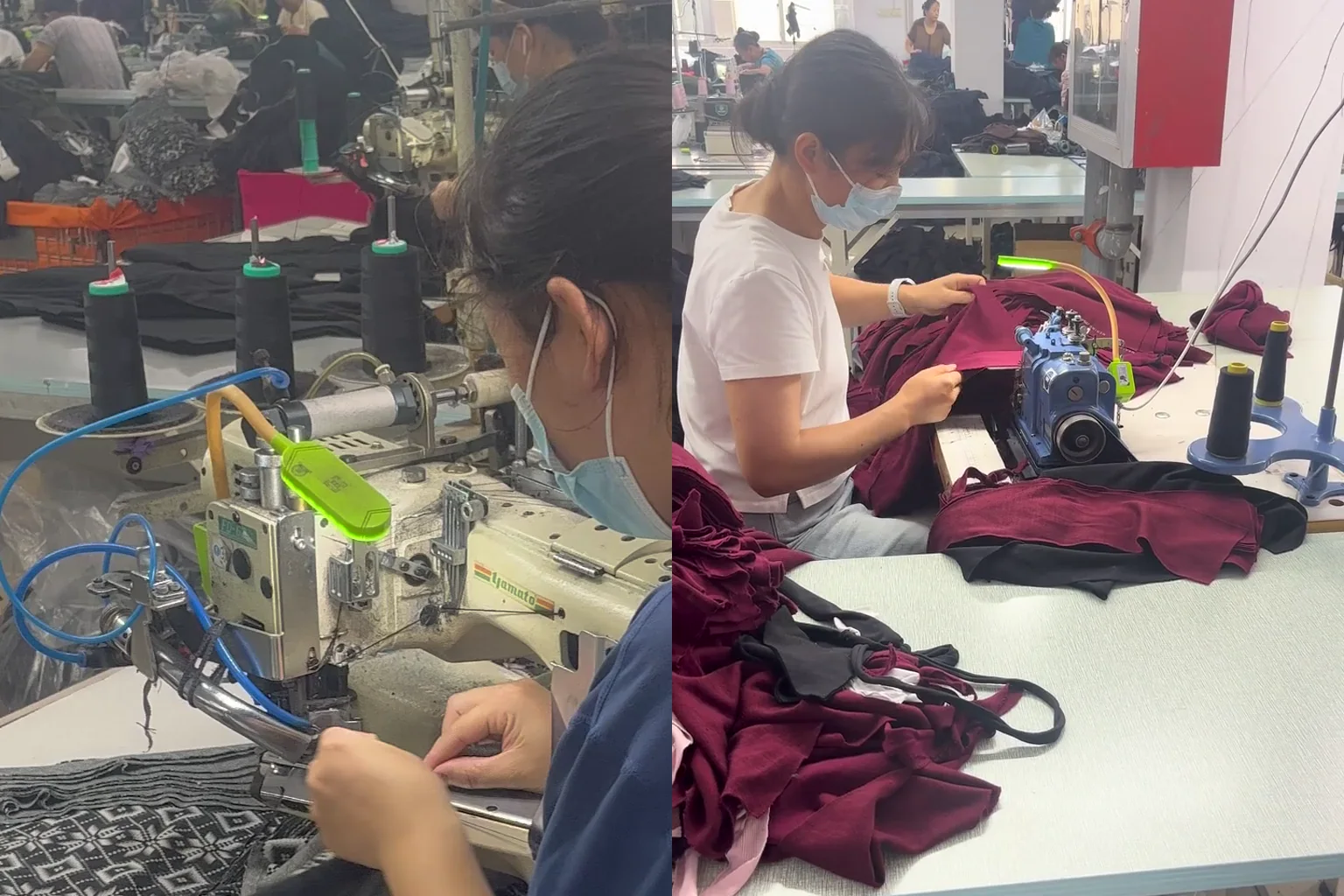
Yamato identifies its FD-62G series as a 4-needle, 6-thread feed-off-the-arm flatseamer. Published submodel applications include T-shirt sleeve closing, underwear crotch seams, lightweight knitted-fabric joins and T-shirt shoulder seams. The same series includes different cutting arrangements, needle distances and fabric-weight applications, so “Yamato FLATLOCK” does not by itself define every production setting.
The fabric edges may overlap by a controlled amount according to the seam class, machine setup and application. Thread formations cover the join, producing a relatively flat construction without the conventional projecting seam allowance associated with many general assembly seams. This makes FLATLOCK useful where inside profile and prolonged skin contact are important.
What the buyer still needs to approve
- The exact garment location and seam direction.
- The required appearance on both faces of the garment.
- Seam width, overlap and stitch density where these are critical.
- Thread type, size, color and elongation requirements.
- Extension, recovery and seam-strength acceptance criteria.
- Puckering, roping, skipped-stitch and edge-exposure limits.
- The approved result after the required laundering or conditioning procedure.
What is Merrow ACTIVESEAM?
Merrow describes the MB-4DFO 2.0 as an ACTIVESEAM flat-overlock platform and as an alternative to conventional FLATLOCK, INTERLOCK and OVERLOCK stitching. The official machine specification identifies 2 needles and a 2- or 3-thread configuration. ACTIVESEAM is therefore a distinct named system, not a generic term for every visually flat seam.
The MB-4DFO platform can be configured around the material, thread and intended application. Merrow publishes multiple ACTIVESEAM variations at the platform level, but possession of the machine does not prove that every published variation is currently offered or used on a particular garment.
Athletik Clothing currently uses the Merrow MB-4DFO 2.0 and works with both 2-thread and 3-thread configurations according to project requirements. The configuration for a specific style must still be confirmed during development; it should not be inferred from a general machine video or finished-garment photograph.
What the current production evidence shows
Athletik's current first-party production material includes front and side views of an MB-4DFO 2.0 operating on knitted garment components, together with a finished-garment seam shown from the exterior and interior in its natural, unstretched state. This supports use of the equipment and shows the production appearance of an actual seam.
These materials are production examples, not a controlled laboratory comparison. They do not identify the thread configuration used on that individual garment and do not establish a quantified advantage in extension, strength or durability. Those properties must be assessed against the approved fabric, thread, seam specification and test method for the project.
FLATLOCK vs ACTIVESEAM: practical comparison
| Decision factor | Industrial FLATLOCK reference | Merrow ACTIVESEAM reference |
|---|---|---|
| System identity | Industrial flatseam construction; 4-needle, 6-thread stitch type 607 is a common technical-knitwear reference. | Merrow named flat-overlock system produced on the MB-4DFO platform. |
| Machine reference | Yamato feed-off-the-arm flatseamer; exact series and submodel depend on the operation. | Merrow MB-4DFO 2.0. |
| Needle and thread reference | Common reference: 4 needles and 6 threads; other flatseam arrangements exist. | 2 needles; 2 or 3 threads according to the machine specification and project setup. |
| Join and profile | Controlled flatseam join with thread formations across the seam; overlap and cutting arrangement depend on the setup. | Low-profile flat-overlock join; final appearance depends on the selected configuration, material and thread. |
| Typical technical use | Long panel joins and selected shoulder, sleeve, side-body, crotch or inseam operations where a low inside profile is required. | Selected low-profile joins on base layers and other technical knitted garments where the ACTIVESEAM construction and appearance are specified. |
| Main specification risk | Calling out only “flatlock” without a stitch reference, seam diagram or approved appearance. | Using “active seam” as a generic term, or assuming the machine platform automatically defines the exact version and performance. |
| Approval basis | Actual-fabric sew-off, seam map, both-face appearance and required performance tests. | Actual-fabric sew-off, confirmed 2- or 3-thread setup, both-face appearance and required performance tests. |
Neither construction is automatically superior. Both can be relevant to next-to-skin technical knitwear, and both can fail if the fabric, thread, feeding, tension, seam placement or acceptance criteria are wrong.
Where each construction may be used
Seam placement should follow the garment's movement, pressure and contact zones. A construction that performs well on one fabric or panel geometry may not produce the same result on another.
Base layers and performance underwear
For close-fitting base layers and performance underwear, evaluate the inside profile at the shoulder, underarm, side body, crotch and inseam. FLATLOCK is a familiar reference for these panel joins. ACTIVESEAM may be evaluated where its 2- or 3-thread flat-overlock construction and visual result suit the product. Confirm the choice through wearer assessment and relevant seam testing on the nominated fabric.
Compression tops and leggings
Compression fabrics place high demands on seam extension and recovery. The development team should examine whether the seam opens, restricts extension, puckers or creates visible tension lines when the garment is worn. Do not approve the construction from a relaxed tabletop sample alone.
Merino wool technical layers
For Merino wool and Merino-blend base layers, fabric weight, knit structure, reinforcement yarns, stretch and recovery all affect sewing behavior. Needle choice, thread, feeding and tension should be developed on the actual bulk-intent fabric. A seam selected for a synthetic compression knit should not be transferred to a Merino program without a new sew-off and approval.
Outdoor and endurance garments
For garments worn under backpacks, harnesses or additional layers, review whether seams sit under repeated pressure. Shoulder, raglan, side-body and underarm placement can matter as much as the stitch system. A low-profile construction should still be repositioned if it lies directly in a high-pressure or repeated-rubbing zone.
How should a buyer choose between FLATLOCK and ACTIVESEAM?
- Define the seam function. State whether the priority is low inside profile, extension, recovery, visual identity, reduced thread coverage or another measurable requirement.
- Map the exact location. Mark every relevant operation on the garment drawing instead of applying one instruction to the entire style.
- Nominate the bulk-intent fabric. Record composition, construction, weight, thickness, stretch and recovery by direction.
- Request both-face sew-offs. Compare exterior and interior appearance in the natural state and at the agreed extension.
- Confirm the construction. Record the stitch reference or named system, thread configuration, seam width and any critical visual details.
- Test according to product risk. Use the buyer's nominated methods and acceptance limits for seam extension, strength, laundering and appearance where required.
- Approve a pre-production reference. The approved sample and controlled specification should govern bulk production.
If the buyer wants to compare both systems, sew-offs should use the same fabric lot and defined thread options under a documented evaluation method. Separate production videos made on different garments are useful capability evidence, but they are not a controlled performance test.
What should the tech pack or spec sheet include?
For each seam operation, include enough information to prevent the factory and buyer from approving different constructions:
- Garment view and exact seam location.
- Required construction: FLATLOCK with stitch reference, or Merrow ACTIVESEAM.
- Reference photograph, seam diagram or approved physical sample.
- Exterior and interior appearance requirements.
- Seam width, stitch density, overlap or edge condition where critical.
- Thread material, size, color and elongation requirements where specified.
- Finished-fabric article, composition, weight, stretch and recovery.
- Required 2- or 3-thread ACTIVESEAM configuration when already determined; otherwise require factory proposal and approval during development.
- Seam-performance test method and acceptance limit where required.
- Laundering, conditioning and wearer-trial requirements.
- Pre-production sample and bulk visual-reference approval.
Avoid writing only “flat seam,” “flatlock/active seam” or “use comfortable stitching.” Those phrases do not establish a reproducible construction or acceptance standard. The technical knitwear tech pack guide provides the wider document-control framework.
How Athletik develops and validates the seam
Athletik reviews the garment drawing, seam map, fabric specification, intended use and testing requirements before proposing a construction. FLATLOCK and ACTIVESEAM are evaluated as separate production options rather than interchangeable labels.
For ACTIVESEAM projects, Athletik can work with either 2-thread or 3-thread configurations depending on project requirements. For FLATLOCK projects, the exact Yamato setup depends on the garment operation and fabric. In both cases, approval should be based on production-intent material and documented in the tech pack, spec sheet or approved sample.
- Review the seam location and functional requirement.
- Produce a sew-off or development sample on the nominated fabric.
- Check exterior and interior appearance in the natural state and at the agreed extension.
- Complete the buyer's required seam and laundering tests.
- Record the approved construction before bulk sewing.
- Use the approved sample and specification for in-line and final comparison.
The general garment MOQ is 500 pieces per style. Final feasibility, development scope and commercial terms depend on the style, fabric, color breakdown, seam construction, testing and delivery requirements.
FLATLOCK and ACTIVESEAM can both support low-profile technical-knitwear construction, but they reach that result through different machine and stitch systems. Buyers should identify the required construction, define its garment location and approve both appearance and performance on the actual fabric.
Buyer questions
Common buyer questions
Is ACTIVESEAM the same as FLATLOCK?
No. ACTIVESEAM is Merrow's named flat-overlock system produced on the MB-4DFO platform. Industrial FLATLOCK is a different flatseam construction; 4-needle, 6-thread stitch type 607 is a common reference in technical knitwear. The two should be specified and quoted separately.
How many threads does the Merrow MB-4DFO 2.0 use?
Merrow's official specification lists 2 needles and a 2- or 3-thread configuration. Athletik uses both thread configurations according to project requirements. The setup for an individual garment should be confirmed during sampling rather than inferred from a general production image.
Is ACTIVESEAM stronger or more stretchable than FLATLOCK?
The seam name alone does not establish the result on a specific garment. Platform-level performance claims should not be applied automatically to a different fabric, thread or setup. Compare sew-offs using the nominated material and agreed test methods.
Can both systems be used for Merino wool base layers?
Both may be evaluated for Merino wool or Merino-blend base layers, subject to the fabric structure, weight, stretch, recovery, thread and seam location. Approval should be based on the actual bulk-intent fabric, not on a seam made on an unrelated synthetic knit.
Does a buyer need to specify the sewing-machine model?
Specify the model or named platform when it is essential to the required construction, as with Merrow ACTIVESEAM. Also define the seam location, appearance and performance criteria. A machine model without an approved sew-off is not a complete product specification.
Can FLATLOCK and ACTIVESEAM be used in the same garment?
Yes, if the seam map and development results support that combination. Different garment operations may have different profile, extension, appearance and assembly requirements. Each construction should be identified by location and approved on the production-intent fabric.
Primary sources